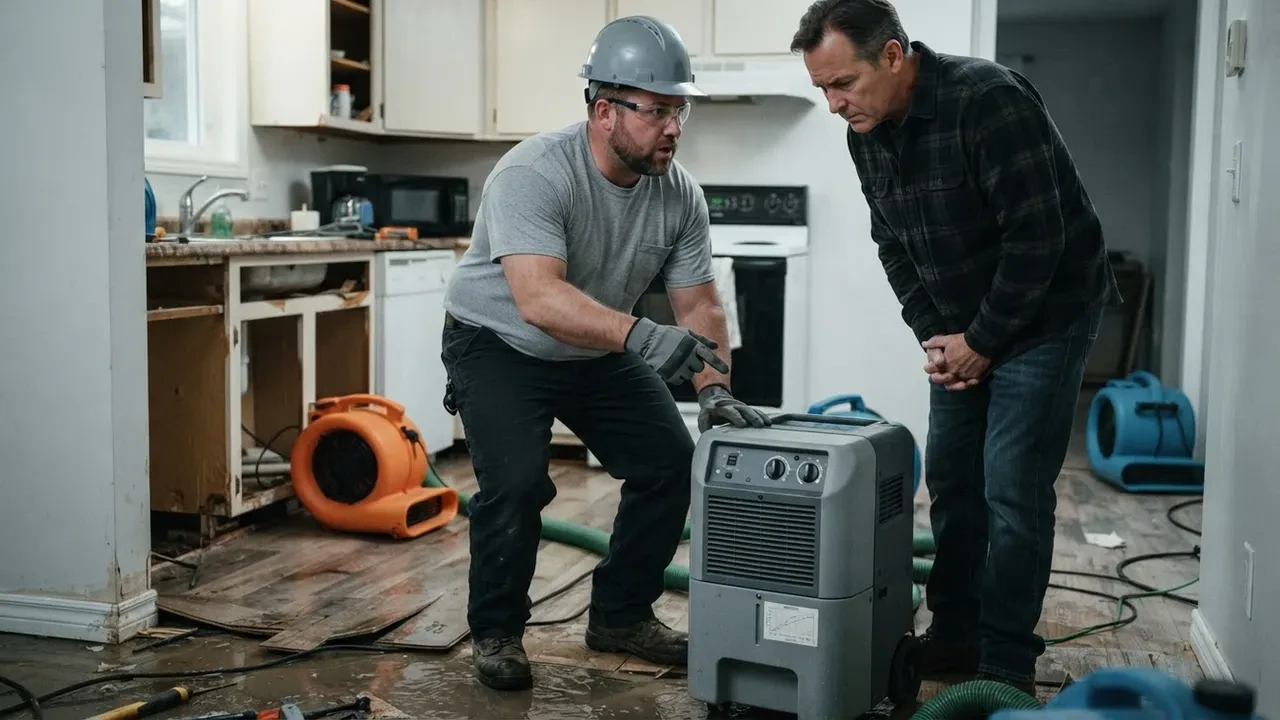
We dry hidden moisture before repairs move forward.
Structural Drying Smyrna GA for a Dry, Sound Home
Structural drying Smyrna GA helps homeowners and property managers remove moisture trapped in walls, floors, and framing after a leak or flood. Our team maps affected materials, sets drying equipment, and checks readings as the structure dries. If a pipe bursts, a roof leaks, or a basement takes on water, call us before damp drywall and flooring turn a manageable cleanup into a larger repair.
Structural drying Smyrna GA is a water damage recovery process that removes moisture from building materials after an intrusion and verifies drying with measured readings. We start by identifying the water source and mapping wet areas, including concealed cavities where moisture can linger. Moisture meters and thermal imaging cameras help us compare affected surfaces with dry reference areas. We then position air movers and dehumidifiers to control airflow and humidity, adjusting the setup as readings change. Drying is complete when materials reach appropriate dry standards, not simply when the room feels comfortable.
Smyrna properties face water intrusion from pipe bursts, roof leaks, basement flooding, storm damage, and crawl space moisture. A wet carpet can hide soaked padding; a small ceiling stain can trace back to a roof leak several feet away. Our structural drying services Smyrna GA address the source area and connected materials, with 24/7 structural drying services in Smyrna GA available for urgent losses. We serve homes and businesses across Cobb County, including properties near Atlanta Road and Spring Road.
Structural drying covers moisture assessment, extraction of accessible standing water, equipment setup, monitoring, and final moisture verification. We explain which materials are being dried and what readings guide the work. The service does not automatically include reconstruction, plumbing repairs, or specialized sewage cleanup; those needs are identified and coordinated according to the loss.
01
✓
Moisture Mapping
We inspect affected rooms and record moisture readings in relevant building materials. The map guides where equipment goes and which areas need follow-up checks. You can see how far the water traveled rather than relying only on visible stains.
02
✓
Water Extraction
When standing water remains, we use extraction equipment to remove it before drying. This step reduces saturation in carpet and on hard floors. We then check nearby edges and transitions for water that has moved beneath the visible surface.
03
✓
Drying Equipment Setup
We place air movers and dehumidifiers based on the room layout and affected materials. Equipment is arranged to move air across wet surfaces and collect moisture released into the room. We explain access and operating considerations before leaving it in place.
04
✓
Progress Monitoring
We return to measure moisture and humidity, inspect equipment operation, and adjust the setup. Regular checks show whether materials are responding and whether the drying plan needs more time. The final visit confirms readings before equipment is removed.
05
✓
Drying Documentation
We record affected areas, readings, and key equipment checks as work progresses. These details give you a useful job history and can support communication with an insurance adjuster. We also review any remaining repair or cleaning needs.
How it works
What to Expect During Drying
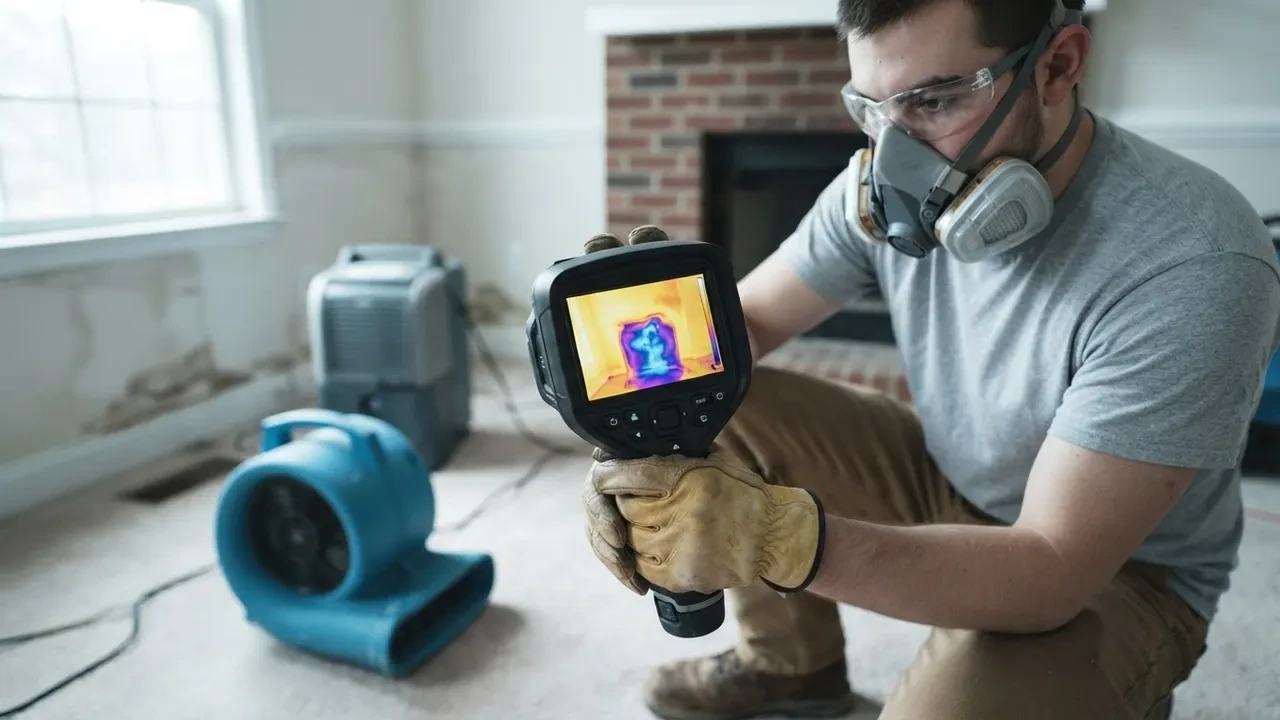
We identify the water source, affected rooms, and materials that need attention. A technician checks visible surfaces and likely pathways, then records baseline moisture readings. Thermal imaging can help flag temperature patterns that warrant direct testing. This first visit usually takes about 30 to 90 minutes, depending on the property size and how far the water traveled.
If water remains on floors or in carpet, we use water extraction units before setting drying equipment. Removing bulk water first reduces the load on dehumidifiers and shortens the time wet materials remain saturated. You will see hoses and extraction tools in the affected area; we protect nearby belongings and keep you informed about access.
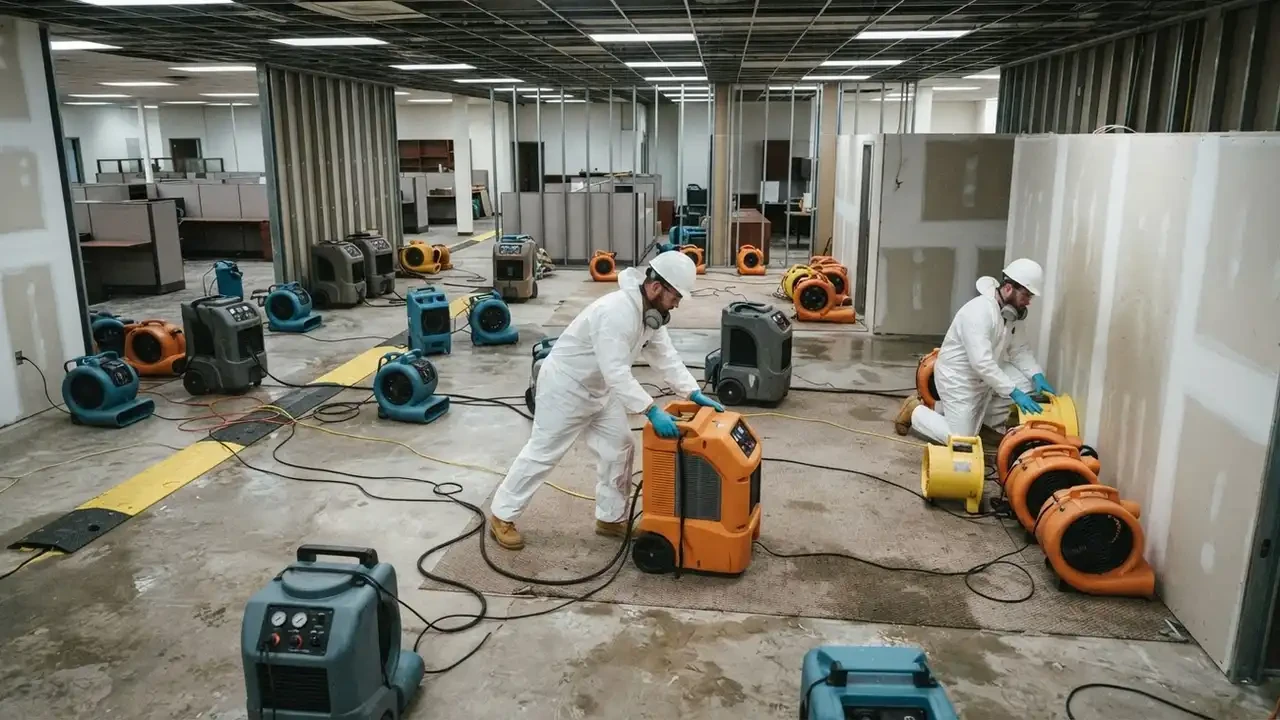
We position industrial air movers to circulate air across wet surfaces and place dehumidifiers to capture released moisture. Equipment placement depends on room layout, material type, and readings. We route cords safely and explain which doors should stay open or closed. The initial setup often takes one to three hours after extraction and inspection.
Our team returns to check moisture levels, humidity, and equipment operation, commonly at 24-hour intervals. We move or adjust machines as readings change rather than leaving one setup untouched. You can expect equipment noise and warm airflow while drying is underway. We also note any new odor, swelling, or visible change that needs a separate repair decision.
We compare final readings with baseline and unaffected reference materials, then document the result. Drying duration ranges from about three days to two weeks, with dense framing, layered floors, or concealed cavities taking longer. Once readings meet the drying goal, we remove equipment and review any remaining repair needs, such as replacing unsalvageable insulation or drywall.
STEP 01Inspect and map
We identify the water source, affected rooms, and materials that need attention. A technician checks visible surfaces and likely pathways, then records baseline moisture readings. Thermal imaging can help flag temperature patterns that warrant direct testing. This first visit usually takes about 30 to 90 minutes, depending on the property size and how far the water traveled.
Tools & methods
Drying Tools and Methods
01
✓
Moisture Meters
We use moisture meters to check water content in materials such as drywall, wood, and flooring. Repeated readings show whether the affected area is drying and help us compare it with an unaffected reference.
02
✓
Thermal Imaging Cameras
Thermal imaging cameras show temperature patterns that can help locate areas for closer moisture testing. We confirm suspicious readings with a meter instead of treating an image alone as proof of water.
03
✓
Industrial Air Movers
Industrial air movers direct airflow across wet surfaces so moisture can leave materials and enter the room air. We adjust placement to suit the room and avoid simply pointing fans without a drying plan.
04
✓
Dehumidifiers
Dehumidifiers collect moisture released from wet building materials and help manage indoor humidity. We monitor conditions as the job progresses and adjust equipment when readings show the room or materials need a different setup.
05
✓
Hygrometers
Hygrometers measure relative humidity and temperature in the affected space. These readings help us understand whether the environment is supporting drying and whether equipment is operating under useful conditions.
Real results
Before and After.
Structural Drying
Kitchen Leak Beneath Hardwood
A supply line leak left the kitchen floor visibly wet, with moisture extending under the cabinet toe-kick. The homeowner could not tell whether the hardwood or subfloor had absorbed water. A quick surface wipe removed the puddle but did not show how far the water had traveled.
After: We extracted the remaining water, mapped readings across the floor, and set directed airflow with dehumidification. Over five days, readings in the affected floor area moved toward the dry reference range. The homeowner received a record of monitored progress and a clear handoff for any finish repair.
A bedroom ceiling stain grew after heavy rain, and the wall below felt cool to the touch. The visible damage covered less than a few square feet, but the moisture path could have reached insulation or framing beyond the mark.
After: After the roof opening was controlled, we checked the ceiling and wall at multiple points, then dried the salvageable materials with monitored equipment. Follow-up readings over four days showed the affected area approaching the reference condition. Damaged finish material was identified for repair rather than concealed.
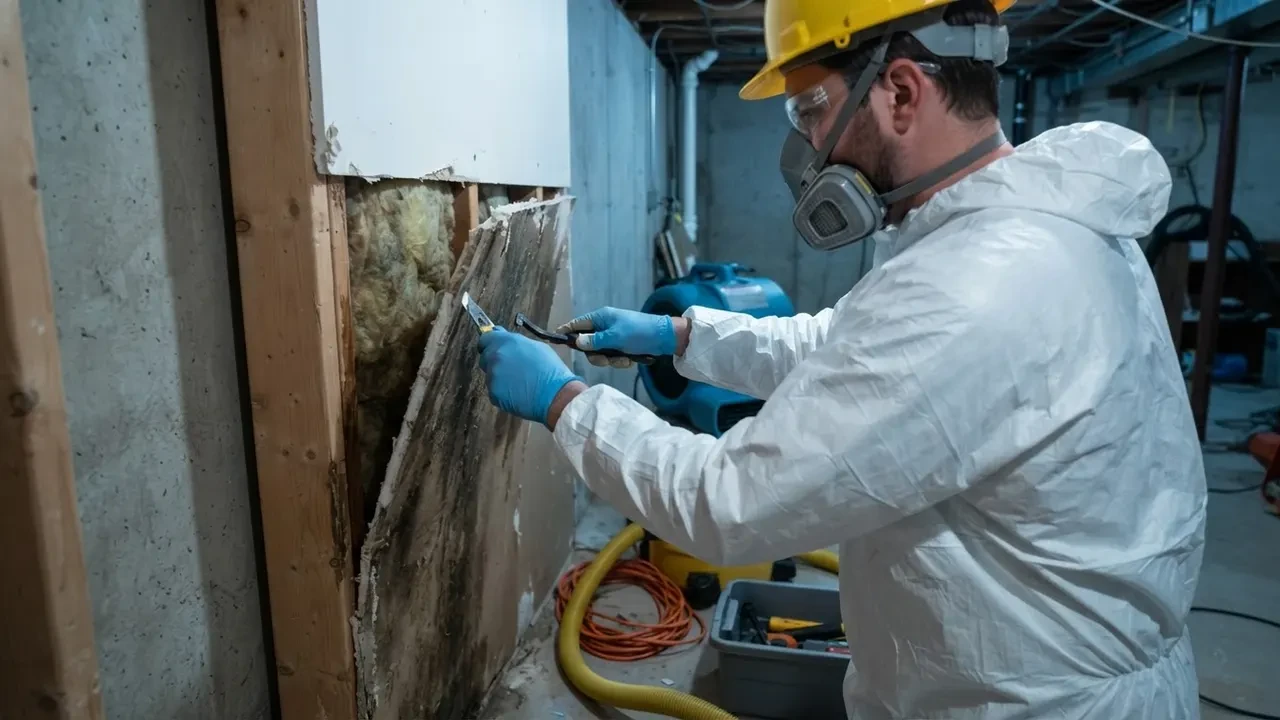
A basement received several inches of water after a storm, soaking carpet and leaving the lower wall damp. Stored boxes blocked part of the floor, and the homeowner noticed a musty odor after the standing water was gone.
After: We removed accessible water, checked carpet and wall materials, and arranged drying around the cleared work area. Over six days, scheduled checks tracked changing moisture readings and humidity. The customer learned which items and materials could remain and which required separate cleaning or repair.
A surface that feels dry can still conceal water inside a wall, beneath a floor, or in insulation. If you need affordable structural drying in Smyrna Georgia, we focus first on the materials actually affected and the measurements that guide their recovery. Early assessment helps you plan the right next step.
A Small Ceiling Stain Keeps Spreading After a Roof Leak
We inspect the stain and nearby ceiling and wall materials, then trace the likely moisture path. Our team records readings, checks for wet insulation where accessible, and sets drying equipment for salvageable materials. We also explain when the roof opening must be repaired before interior work can hold.
↗02
Hardwood Boards Swell After a Kitchen Pipe Burst
We extract accessible water and measure the hardwood and subfloor at multiple points. Equipment placement supports controlled airflow and dehumidification, while follow-up checks show whether readings are improving. We use that information to discuss drying time and whether any boards require repair or replacement.
↗03
Basement Carpet Feels Dry but Smells Musty
We check carpet, padding, and surrounding materials rather than treating odor as a surface problem. Where appropriate, we extract remaining water and dry the floor assembly with monitored equipment. If contamination or mold is suspected, we identify the need for the proper assessment before deodorizing.
↗04
Crawl Space Remains Damp After Heavy Smyrna Rain
We assess access, standing water, and affected materials, then coordinate water removal and structural drying. Moisture readings help identify whether framing or insulation remains wet after extraction. We also note drainage or sump concerns that need attention to reduce repeat exposure.
↗
Proof you can check
Training and Job Documentation
Water Restoration Technician · Institute of Inspection, Cleaning and Restoration Certification
Applied Structural Drying · Institute of Inspection, Cleaning and Restoration Certification
Applied Microbial Remediation Technician · Institute of Inspection, Cleaning and Restoration Certification
Structural drying in Smyrna commonly varies depending on water volume, affected rooms, materials, and equipment days. A small contained loss costs less than a multi-room event with wet wall cavities or hardwood flooring. Typical pricing in this area should be based on inspection and measured conditions. We explain the factors and provide upfront pricing before the work proceeds; repairs and specialized cleanup can add separate costs.
Most structural drying jobs take about three to seven days, while concealed moisture or dense materials can extend drying to 10 to 14 days. We check readings regularly and remove equipment when the affected materials reach the drying target. Carpet padding, wall cavities, and hardwood assemblies respond at different rates. You should expect some equipment noise during the process, and we will explain any schedule change when the readings show more time is needed.
Many policies cover necessary drying after a sudden, covered water loss, but coverage depends on your policy and the cause. Structural drying services in Smyrna GA are commonly documented with moisture readings, photos, equipment logs, and an itemized work record. Gradual leaks, maintenance issues, and flood exclusions can affect a claim. We can provide job documentation for your adjuster, while your insurer makes the coverage decision.
Smyrna Water Damage Company handles urgent structural drying calls in Smyrna, including nights and weekends. Call (833) 546-4116 for 24/7 structural drying services in Smyrna GA after a burst pipe, storm leak, or indoor flooding. We assess the affected area, extract standing water where appropriate, and plan monitored drying. If water is near electrical equipment or comes from a sewage backup, keep clear and tell us before entering.
A wet wall or floor needs measured attention before repairs cover it up. Our team serves Smyrna, GA and can help after leaks, flooding, or storm damage. Call (833) 546-4116 to arrange an assessment and discuss the next step.
Call (833) 546-4116 for help with a leak, flooded room, sewage backup, or mold concern in Smyrna. Calls are accepted around the clock for urgent restoration requests, and we connect you with independent companies serving the area. Share your neighborhood or ZIP code, the water source, and whether the damage is still active so we can direct your request.