Roof leak water damage repair Smyrna GA helps homeowners and property managers stop water intrusion, remove soaked materials, and dry affected rooms before damage spreads. Our Smyrna team traces ceiling stains and attic moisture, then coordinates practical restoration steps after rain or storm damage. If you need roof leak repair Smyrna GA residents can call us to address the water damage, protect belongings, and plan the next repair.
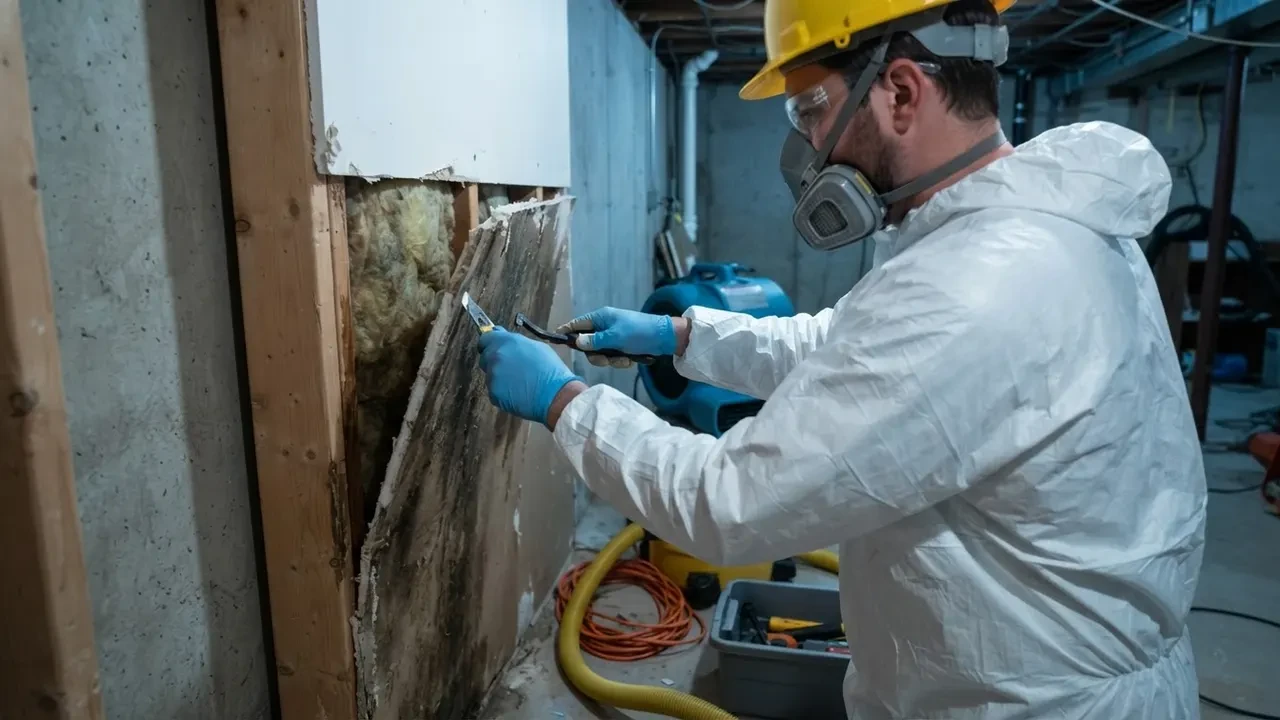
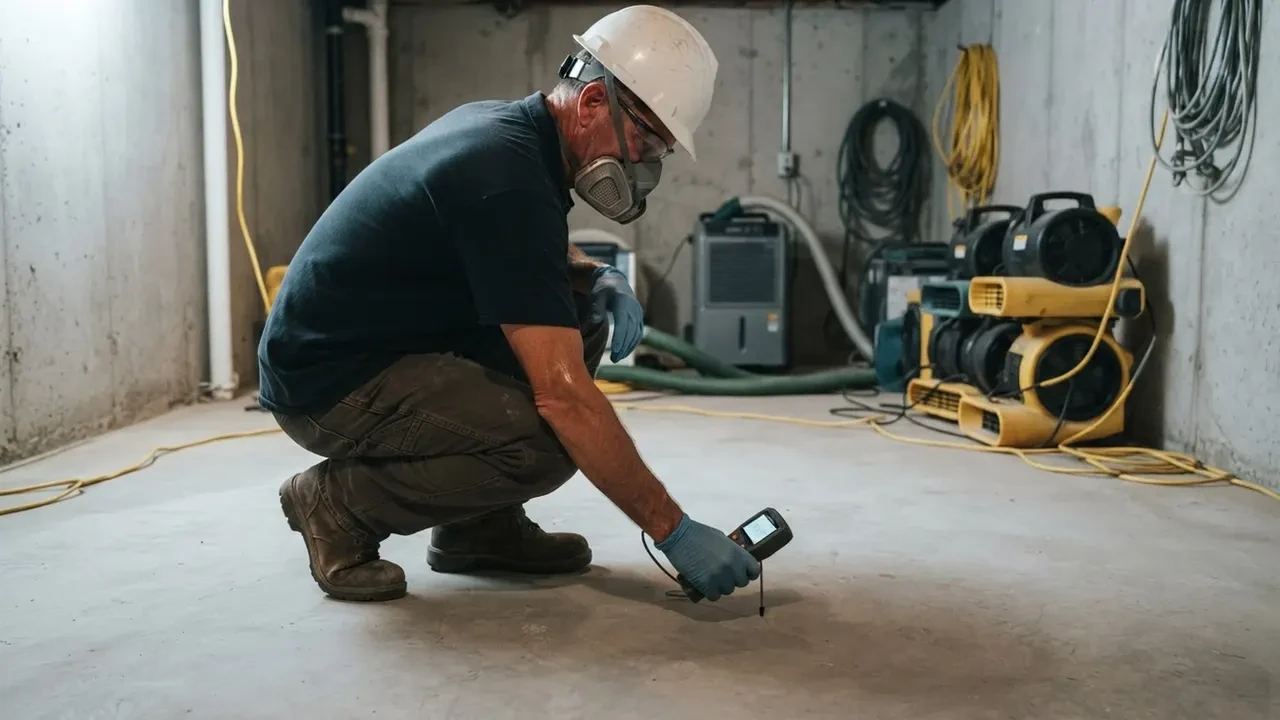
Roof leak water damage repair Smyrna GA is a property restoration service that removes water and dries building materials after rain enters through a damaged roof. We inspect ceilings, attic spaces, insulation, wall cavities, and flooring to map where moisture traveled. Moisture meters and thermal imaging cameras help us locate damp areas that a surface check can miss. We extract standing water, remove unsalvageable material when needed, and set drying equipment based on measured conditions. The goal is to stop ongoing damage and leave the affected structure ready for appropriate repairs.
Smyrna homes face roof leaks after wind-driven rain, worn flashing, lifted shingles, clogged drainage, or storm damage around vents and valleys. A ceiling stain near Spring Road or damp insulation in a home near South Cobb Drive needs more than paint; trapped moisture can lead to mold growth and damaged drywall. For roof leak water damage repair Smyrna GA near me, we identify the entry path, document affected rooms, and start drying promptly. We also distinguish roof-related moisture from pipe bursts or other plumbing leaks.
Roof leak water damage repair covers inspection of affected interior areas, water extraction, removal of materials that cannot be dried safely, and monitored structural drying. We document the work and explain what needs rebuilding after dry conditions are verified. Permanent roof construction, full roof replacement, and unrelated plumbing repairs require the appropriate trade. Our focus is the water damage inside your property and the practical steps needed to restore it.
01
✓
Leak Impact Inspection
We inspect the visible stain and check connected attic, wall, and floor areas for moisture migration. Photos and readings establish a baseline for the affected rooms. This helps you understand whether the leak stayed near one ceiling section or traveled into insulation, framing, or finished flooring.
02
✓
Water and Debris Removal
We extract standing water and remove debris or saturated materials that cannot be dried in place. Wet insulation and compromised drywall are handled carefully to limit dust and protect nearby belongings. The removal area is based on observed damage and moisture readings, not an arbitrary full-room demolition.
03
✓
Controlled Structural Drying
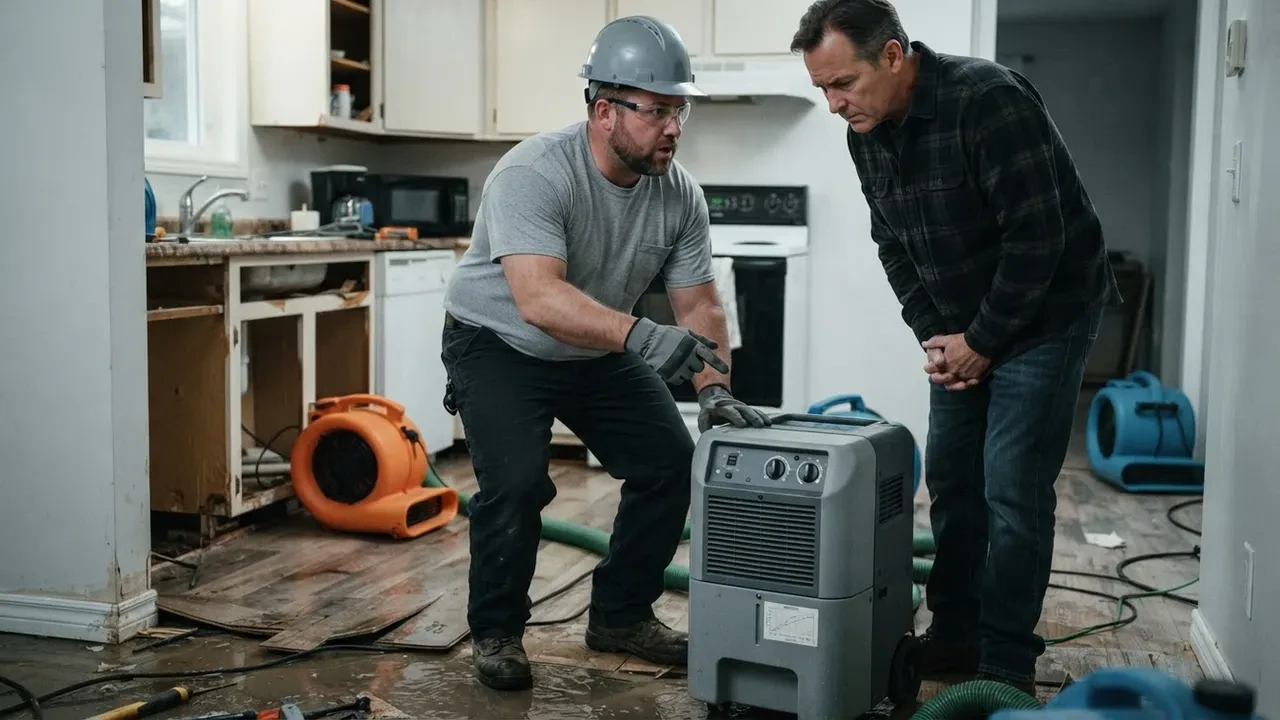
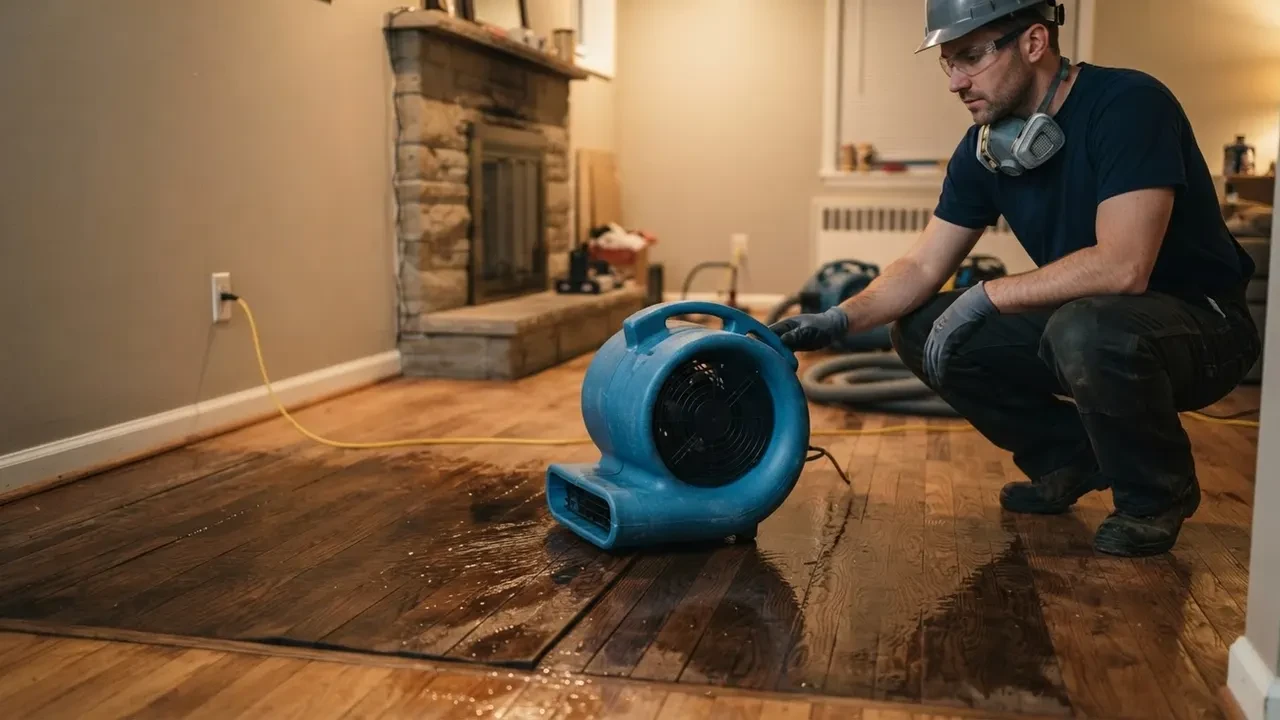
Industrial air movers and dehumidifiers are positioned to dry affected materials and reduce indoor humidity. We record moisture conditions and revisit the area to adjust equipment. Drying often takes two to five days, though concealed cavities or multiple rooms can extend the schedule.
04
✓
Cleaning and Documentation
We clean affected work surfaces and use appropriate antimicrobial solutions when conditions warrant them. Photos, readings, and a work record show what was affected and how drying progressed. You can use those details to coordinate repairs and communicate with your insurer.
05
✓
Repair-Ready Handoff
After readings confirm that drying goals have been met, we explain what remains for drywall, insulation, paint, trim, or flooring repairs. We also identify the need for a separate roof repair if the entry point remains open. This keeps cosmetic work from covering unresolved moisture.
How it works
What to Expect During Service
We begin by asking when the leak appeared, where you saw water, and whether the roof is still taking on rain. Then we inspect the ceiling, attic access, adjacent walls, and floors. Moisture readings, photos, and infrared checks establish the affected area. The initial assessment often takes 30 to 90 minutes, depending on access and room count.
If water is still entering, we protect belongings, catch drips, and coordinate immediate roof protection or a tarp-over when conditions allow. We do not treat a wet ceiling as safe to puncture without checking for structural and electrical hazards. You will know which areas to avoid while the source is addressed.
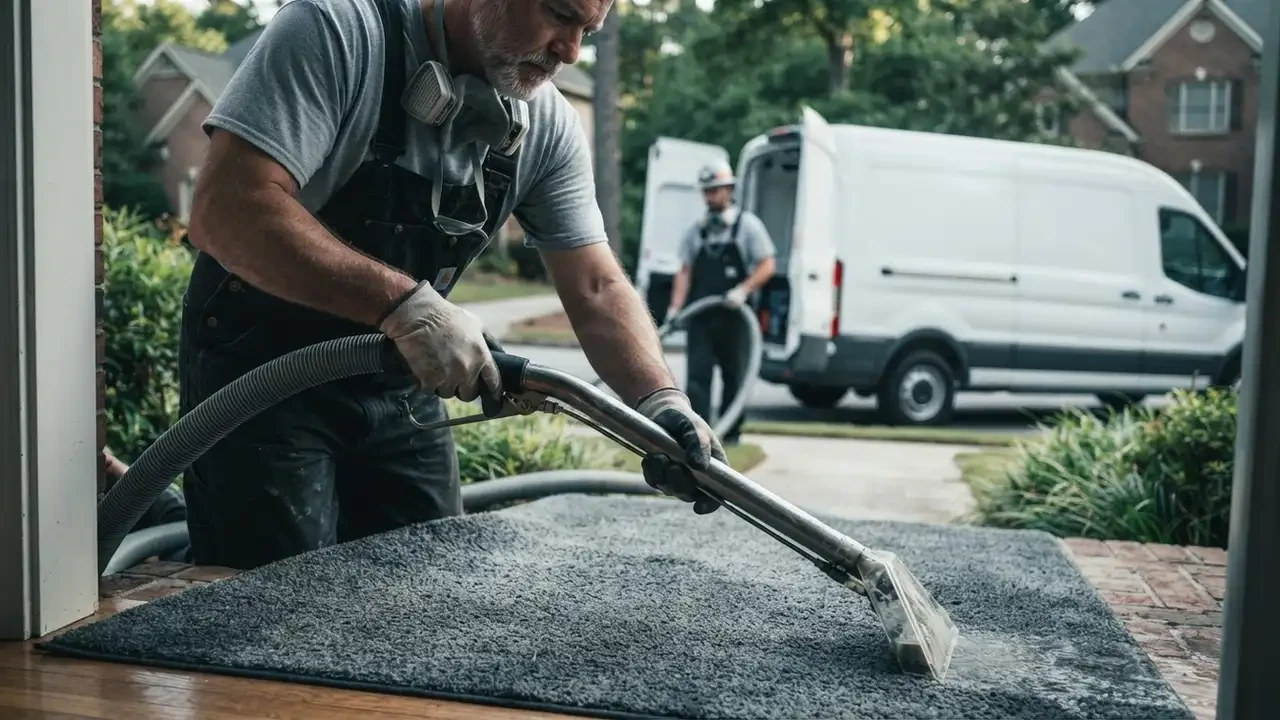
We use water extraction units on standing water and remove materials that are too damaged to dry in place. That can include saturated insulation, swollen drywall, or wet carpet padding. Before opening a cavity, we explain the affected section and protect nearby finishes. This step commonly takes several hours for a single room.
Our technicians position industrial air movers and dehumidifiers to move moisture out of the structure, not simply warm the room. Hygrometers and moisture meters track relative humidity and material readings. Equipment runs continuously between checks, often for two to five days, with adjustments as the wettest materials dry.
We recheck the same locations and compare readings with the initial record before taking drying equipment away. Once the affected area is dry, we outline the next steps for drywall, insulation, paint, flooring, or other repairs. You receive the documentation needed to discuss the restoration with your insurer and repair contractors.
STEP 01Inspect And Document
We begin by asking when the leak appeared, where you saw water, and whether the roof is still taking on rain. Then we inspect the ceiling, attic access, adjacent walls, and floors. Moisture readings, photos, and infrared checks establish the affected area. The initial assessment often takes 30 to 90 minutes, depending on access and room count.
Tools & methods
Tools and Drying Methods
01
✓
Moisture Meters
We take repeat readings in drywall, framing, and flooring to map wet materials and confirm whether they are drying. Comparing readings with nearby dry areas helps guide targeted removal.
02
✓
Thermal Imaging Cameras
A thermal image can highlight temperature patterns associated with moisture behind a surface. We use it as a guide, then verify suspected wet areas with direct measurements before making a repair decision.
03
✓
Industrial Air Movers
Air movers direct airflow across wet surfaces and into targeted areas to support evaporation. We position them to reach the affected assembly while avoiding unnecessary disruption to unaffected rooms.
04
✓
Dehumidifiers
Dehumidifiers remove water vapor released during structural drying. We select placement based on room size, moisture load, and airflow, then track humidity so equipment settings match actual conditions.
05
✓
Water Extraction Units
Extraction units remove standing water from floors and other accessible surfaces. Removing pooled water early reduces the amount available to soak carpet padding, baseboards, and nearby building materials.
06
✓
Hygrometers
Hygrometers measure relative humidity in the work area. We use those readings alongside material moisture checks to see whether the room is supporting steady drying or needs an equipment adjustment.
Real results
Before and After.
Roof Leak Water Damage Repair
Bedroom Ceiling After Wind-Driven Rain
A homeowner near Downtown Smyrna found a widening ceiling stain after rain and noticed damp insulation above the room. The visible mark covered about 4 square feet, but moisture readings showed a broader area in the cavity. The family had moved furniture but did not know whether the wall or floor was affected.
After: We removed the saturated insulation and damaged drywall, extracted water, and set air movers with a dehumidifier. Follow-up checks over three days showed readings trending down across the opened cavity and adjacent wall. The homeowner received photos and a record of the drying checks before arranging ceiling replacement.
Water from a roof opening reached a living-room wall and spread across roughly 60 square feet of carpet. The surface felt damp, but the carpet padding and baseboard held additional moisture. The property manager needed to protect furniture and keep the unaffected side of the room accessible.
After: We extracted the carpet, assessed the padding and subfloor, and removed the portion that could not be salvaged. Air movers and dehumidification ran for four days, with readings taken at the wall and floor. The affected zone dried, and the manager had a documented handoff for flooring and baseboard repairs.
A storm sent water through a damaged roof detail above a Smyrna office corridor. Ceiling tiles were stained across two sections, and water reached the edge of a carpeted work area. Staff placed containers under drips, but moisture was also present above the ceiling grid.
After: We protected the corridor, removed wet ceiling tiles, extracted water from the carpet edge, and checked the cavity and nearby wall. Drying equipment ran for three days with repeat humidity and material checks. The office received a photo record and a clear sequence for ceiling and roof repairs.
A roof leak can create hidden damage long after the rain stops. For ceiling water damage from roof leak Smyrna GA properties experience, we trace moisture, remove water, and dry affected materials. Acting before damp cavities remain closed helps reduce material loss and gives you a clearer route to repairs.
A Brown Ceiling Stain Keeps Growing After Each Storm
We inspect above and around the stain, check moisture at multiple points, and document the likely path. If materials are saturated, we remove the affected section, extract water, and set drying equipment. We also flag the need to stop the roof entry so the same area is not repeatedly soaked.
↗02
Water Drips Through a Ceiling Fixture During Heavy Rain
We tell you to keep clear of the wet fixture and avoid switching it on. Our team assesses the area, protects belongings, and checks for active water before opening any ceiling. After the immediate hazard is addressed, we extract water, remove unsafe material, and dry the surrounding structure.
↗03
A Musty Smell Remains After the Ceiling Appears Dry
We use moisture readings and targeted inspection to locate retained dampness. Where materials cannot be dried in place, we remove them and clean the affected surfaces. Dehumidification and follow-up readings help confirm that the odor source is addressed rather than covered with fragrance.
↗04
Rainwater Has Soaked Carpet Below a Roof Opening
We extract water from the carpet, inspect the padding and floor beneath, and measure moisture in surrounding materials. We determine whether the carpet can be dried or whether padding needs removal. Air movers and dehumidifiers then target the wet assembly, with readings guiding the final check.
↗
Proof you can check
Training and Work Standards
Water Damage Restoration Technician · IICRC
Applied Structural Drying · IICRC
Applied Microbial Remediation Technician · IICRC
EPA Lead-Safe work practices · U.S. Environmental Protection Agency
A small, accessible leak cleanup may vary while multi-room drying and material removal can be higher for larger losses. The price in Smyrna depends on water volume, access, affected materials, equipment days, and whether ceilings or insulation need removal. We assess the damage and explain the work before proceeding. Roof replacement or structural reconstruction is separate from water mitigation.
Insurance may cover sudden, accidental water damage, but it often excludes gradual wear, deferred maintenance, or the roof repair itself. Your policy controls the decision. We document the wet areas with photos, moisture readings, and a work record so you can share them with your adjuster. Roof leak repair in Smyrna is distinct from restoring damaged ceilings, insulation, flooring, or contents.
A contained one-room loss may take one to three days to dry, while several rooms or wet wall cavities can take four to seven days. The schedule depends on material type, moisture depth, temperature, airflow, and humidity. We check readings during the drying period and adjust equipment instead of removing it based on appearance alone. Rebuilding and painting add time after drying is complete.
Call Smyrna Water Damage Company at (833) 546-4116 for emergency water mitigation after a roof leak in Smyrna. We inspect the affected rooms, remove standing water, and set drying equipment when needed. A roof contractor may be required to permanently repair shingles, flashing, or other roof components. If the ceiling is bulging, avoid the area and do not touch nearby electrical fixtures.
Roof leak water damage repair Smyrna GA starts with a careful inspection and a clear plan for drying your home. Our team serves Smyrna, Georgia, and surrounding Cobb County communities. Call (833) 546-4116 now; IICRC-informed restoration procedures guide our water mitigation work.
Call (833) 546-4116 for help with a leak, flooded room, sewage backup, or mold concern in Smyrna. Calls are accepted around the clock for urgent restoration requests, and we connect you with independent companies serving the area. Share your neighborhood or ZIP code, the water source, and whether the damage is still active so we can direct your request.