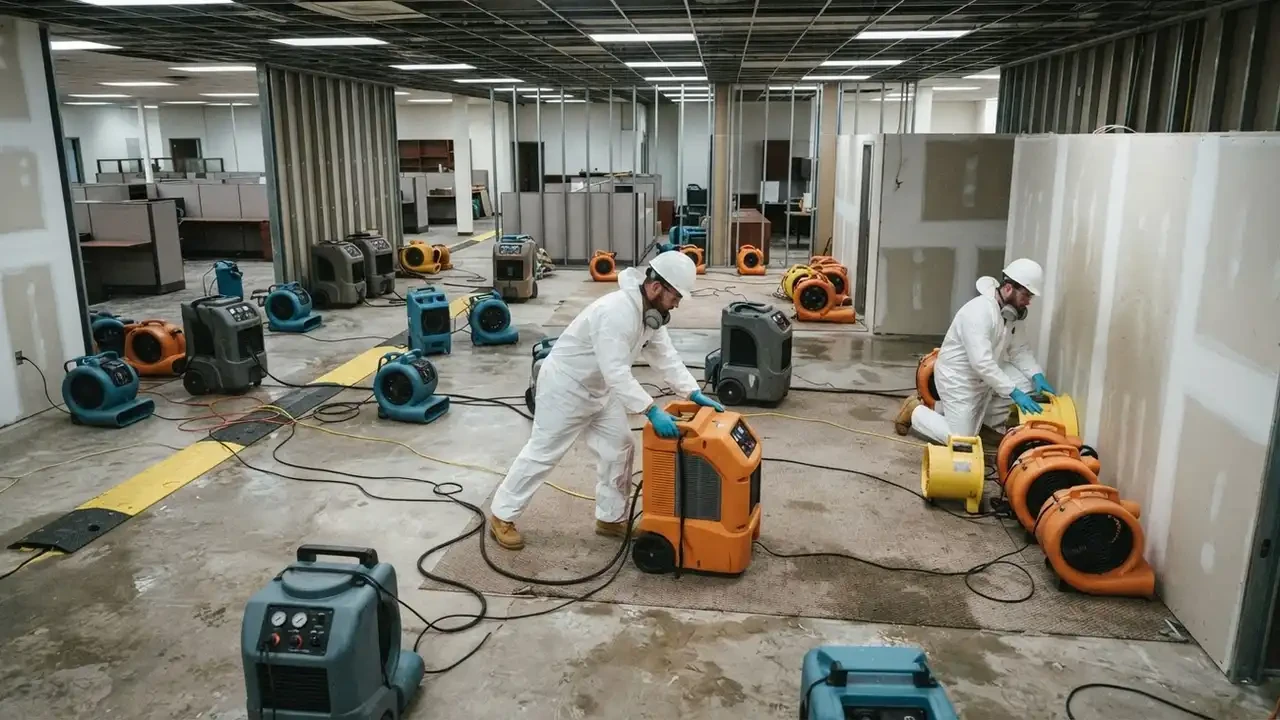
Moisture detection and thermal imaging Smyrna GA helps homeowners and property managers locate concealed moisture after a pipe burst, roof leak, or unexplained musty odor. Our team pairs thermal imaging inspection Smyrna GA with moisture-meter readings to check walls, ceilings, floors, and other suspect areas without opening them unnecessarily. You get a clear account of what the images show and practical next steps for drying or repair.
Moisture detection and thermal imaging Smyrna GA is a noninvasive inspection service that uses surface-temperature patterns and moisture readings to locate areas that may be wet behind finished surfaces. Our technicians scan likely trouble spots with a thermal imaging camera, then verify suspicious areas with a moisture meter; an infrared image alone does not prove that water is present. We compare readings across affected and unaffected materials, document the findings, and explain where targeted access or drying is warranted. That process helps you avoid unnecessary demolition while catching concealed dampness early.
Smyrna homes and commercial spaces can develop hidden wet areas after pipe bursts, roof leaks, storm damage, or appliance failures. A ceiling stain can appear far from the entry point, while moisture under hardwood flooring or behind drywall may stay out of sight. Our inspection follows the water path, checks adjacent materials, and records the readings. If you searched for moisture detection and thermal imaging Smyrna GA near me, we can assess the affected area and outline a practical next step for your property in Cobb County.
Your appointment includes a review of the reported water event, a thermal scan of relevant surfaces, direct moisture checks at suspicious locations, and a plain-language summary of findings. We identify limits, such as inaccessible cavities or conditions that affect readings. Drying equipment, demolition, laboratory testing, and repairs are separate work when needed; we explain how each relates to the inspection results before proceeding.
01
✓
Event and Area Review
We discuss when the leak or odor began, what has changed, and whether the source is still active. Then we identify rooms and materials most likely to be affected. This keeps the scan focused and gives context to readings collected during the visit.
02
✓
Thermal Surface Scan
We scan relevant walls, ceilings, floors, and transitions for temperature patterns that stand out from nearby surfaces. The camera helps direct attention but does not confirm moisture by itself. We explain possible causes before interpreting a pattern as a concern.
03
✓
Moisture Verification
We use moisture meters to check suspect materials and compare them with similar reference areas. Results depend on material type and meter mode, so we record where each reading was taken. This step helps distinguish a scan anomaly from a confirmed damp condition.
04
✓
Findings and Next Steps
We summarize the areas checked, the readings that matter, and the likely next action. If moisture is confirmed, we discuss source control, drying, or targeted access. You can use the information to coordinate repairs or share relevant findings with your insurer.
How it works
What to Expect During Inspection
We begin by asking what happened, when you first noticed it, and whether the water source is still active. Tell us about recent rain, plumbing work, a roof leak, or a recurring odor. This first conversation takes about 10 to 15 minutes and helps us choose a sensible scan path rather than checking every surface at random.
Our technician scans the affected room and nearby surfaces with a thermal imaging camera, watching for temperature patterns that differ from surrounding material. We check walls, ceilings, floors, and transitions around plumbing fixtures. A typical focused scan takes 30 to 60 minutes, depending on room count, access, and how far the suspected water path extends.
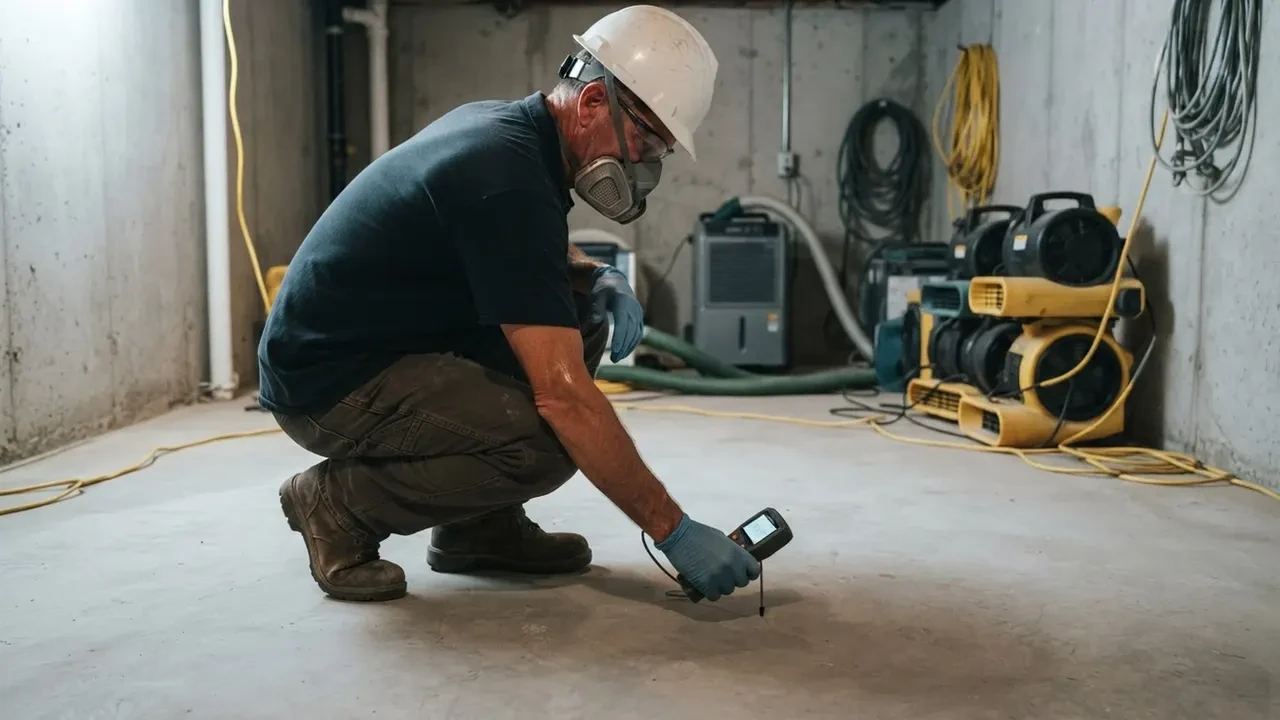
A thermal image is a clue, not a moisture diagnosis by itself. We use moisture meters to test suspect spots and compare them with dry reference areas made of similar material. Where access is limited and appropriate, a borescope can help look inside an existing opening. We explain each reading in plain language and flag measurement limits.
We note the locations checked, material readings, visible damage, and likely boundaries of the affected area. If a room has several anomalies, we distinguish verified wet materials from temperature changes caused by sunlight, airflow, or building systems. You can use this record to plan drying, discuss repairs, or share relevant documentation with your insurer.
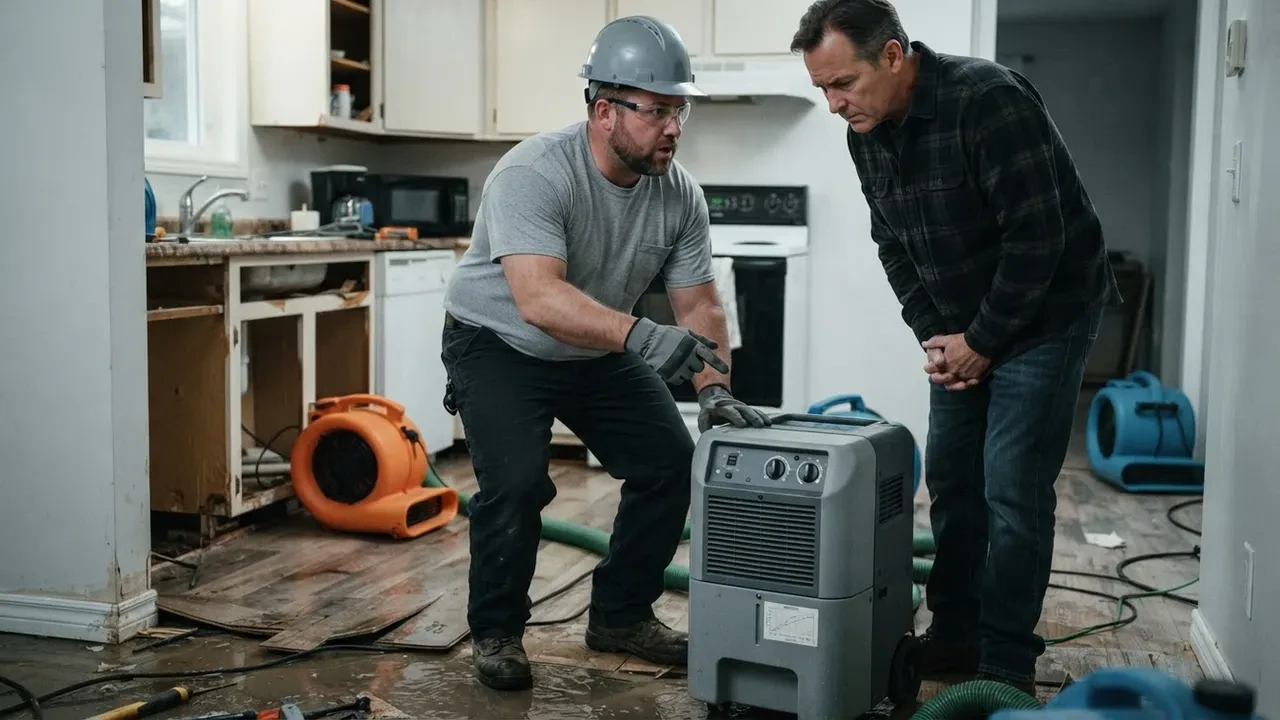
Before we finish, we explain whether the source needs repair, whether drying is appropriate, and which materials need follow-up measurements. When moisture is confirmed, our team can discuss structural drying with dehumidifiers and industrial air movers. If the scan shows no measurable dampness, we explain what we checked and what symptom to monitor.
STEP 01Review the History
We begin by asking what happened, when you first noticed it, and whether the water source is still active. Tell us about recent rain, plumbing work, a roof leak, or a recurring odor. This first conversation takes about 10 to 15 minutes and helps us choose a sensible scan path rather than checking every surface at random.
Tools & methods
Tools and Inspection Methods
01
✓
Thermal Imaging Cameras
These cameras display surface-temperature differences that can help locate areas for closer inspection. We interpret patterns in context and verify suspected moisture rather than treating the image as a direct water measurement.
02
✓
Moisture Meters
Meters provide comparative readings in suitable building materials. We check suspect locations and reference areas, noting material and measurement position so results are useful for follow-up.
03
✓
Hygrometers
Hygrometers measure indoor relative humidity and help describe room conditions during an assessment. That context matters when evaluating drying progress and interpreting temperature patterns.
04
✓
Borescopes
Where an existing opening provides safe access, a borescope can help view a concealed cavity. It supports visual assessment but does not replace moisture readings or a complete source investigation.
05
✓
Infrared Thermometers
An infrared thermometer checks surface temperature at a selected point. We use it as a supplementary check when comparing a suspected anomaly with nearby surfaces.
Real results
Before and After.
Moisture Detection and Thermal Imaging
Tracing a Roof Leak
A homeowner noticed a ceiling stain that returned after rain. The visible mark measured about 18 inches across, but water could have travelled farther above the finished surface. No one had confirmed whether the surrounding drywall or the adjacent wall was still damp, leaving the repair boundary uncertain.
After: We scanned the ceiling and tested the surrounding area with a moisture meter. The documented readings identified a damp section extending roughly 2 feet beyond the visible stain, while the nearby wall tested comparable to a dry reference. The owner had a focused area for roof follow-up and interior drying checks.
A pipe leak affected a hallway wall and the edge of the hardwood floor. The water was stopped, but the boards looked normal from above and the baseboard felt slightly soft. The homeowner wanted to know whether the wet area ended in the hall or continued into the adjoining room.
After: Our scan and meter checks found elevated readings along 6 feet of the hallway wall and at two floor-edge locations. The adjoining room readings matched the comparison area. That map helped direct drying to the confirmed section and gave the owner specific points for follow-up instead of treating both rooms as equally affected.
A basement had a recurring musty smell after rain, though no standing water remained by the time the owner called. The lower wall looked clean, and stored boxes obscured part of the perimeter. The source and extent were unclear, so the owner could not tell whether to focus on plumbing or exterior water entry.
After: We inspected accessible wall and floor transitions, moved the scan around the reported odor, and verified two damp lower-wall locations. The readings provided a practical boundary for further inspection and showed that several nearby surfaces were not elevated. The owner could investigate the likely entry route without treating the entire basement as damaged.
Moisture detection and thermal imaging helps locate hidden wet materials before visible damage tells the whole story. If a leak is active, stop the source when safe and arrange an inspection. Our team checks the symptoms you see against measured conditions, then explains what should happen next.
A Ceiling Stain Keeps Growing After Each Heavy Rain
We scan around the stain and adjoining ceiling, then verify suspicious areas with moisture meters. Our findings help separate the visible mark from the likely water path and identify where roof repair and interior drying should be coordinated. We document the checked locations so you can follow the repair through.
↗02
A Wall Smells Musty but Has No Visible Mark
We review nearby plumbing and exterior-wall conditions, scan the surface, and check likely points with a meter. When access is needed, we explain where a small opening would provide useful confirmation. The inspection gives you a targeted route rather than a broad demolition guess.
↗03
Hardwood Boards Swell After a Plumbing Leak
We compare readings across affected and unaffected flooring and check nearby wall edges for continued moisture. The results help determine whether further drying is needed and whether the leak source has been controlled. We record the locations for repeat checks before repair decisions are made.
↗04
A Basement Floor Dries but Dampness Returns at the Wall
We inspect the floor perimeter, lower walls, and likely source areas, then verify suspect materials with moisture readings. If the pattern points to seepage or a sump issue, we explain what should be assessed next. That information helps you address the source instead of repeatedly drying the same spot.
↗
Proof you can check
Training and Work Standards
IICRC Water Restoration Technician · Institute of Inspection, Cleaning and Restoration Certification
IICRC Applied Structural Drying · Institute of Inspection, Cleaning and Restoration Certification
IICRC Applied Microbial Remediation Technician · Institute of Inspection, Cleaning and Restoration Certification
A focused inspection commonly varies, with larger or multi-room assessments varying. Price depends on the number of areas, access, documentation needs, and whether repeat readings are requested. We explain the price before work begins. A camera scan is not a substitute for direct moisture verification, so the inspection includes appropriate measurements where conditions allow.
Thermal imaging can identify useful temperature patterns, but it does not measure moisture directly or confirm a leak on its own. Accuracy improves when our technician accounts for airflow, sunlight, material type, and room conditions, then verifies suspicious areas with moisture meters. Expect an initial scan to take 30 to 60 minutes in a focused area. Hidden cavities or mixed materials can require additional checks.
Coverage depends on your policy and the cause of the water damage; inspection costs are not automatically covered. Save the inspection findings, photographs, and any source-repair records, then ask your insurer how your policy treats assessment and mitigation. We can provide clear documentation of locations and readings for your claim file. Gradual leaks, maintenance issues, and sudden accidental events may be handled differently.
Smyrna Water Damage Company performs thermal imaging inspection for homes and commercial properties in Smyrna and nearby Cobb County communities. Call (833) 546-4116 to discuss the symptoms, the affected rooms, and whether the source is active. A focused inspection often takes one to two hours. We scan likely areas, verify anomalies with moisture readings, and explain practical next steps.
A damp wall, unexplained odor, or spreading ceiling mark deserves a measured inspection. Our team verifies thermal anomalies with moisture readings and explains the next step. Call Smyrna Water Damage Company at (833) 546-4116 to schedule your Smyrna, GA inspection.
Call (833) 546-4116 for help with a leak, flooded room, sewage backup, or mold concern in Smyrna. Calls are accepted around the clock for urgent restoration requests, and we connect you with independent companies serving the area. Share your neighborhood or ZIP code, the water source, and whether the damage is still active so we can direct your request.