We locate moisture, contain growth, and restore affected rooms.

Mold Remediation Smyrna GA for a Drier, Safer Home

mold remediation Smyrna GA helps homeowners and property managers address visible growth, musty odors, and damp materials after leaks or flooding. We inspect the affected area, trace moisture, and explain the work before cleanup begins. Our mold removal Smyrna GA service focuses on the source as well as damaged drywall, flooring, and other porous materials, so your rooms can be dried and repaired instead of simply covered up.

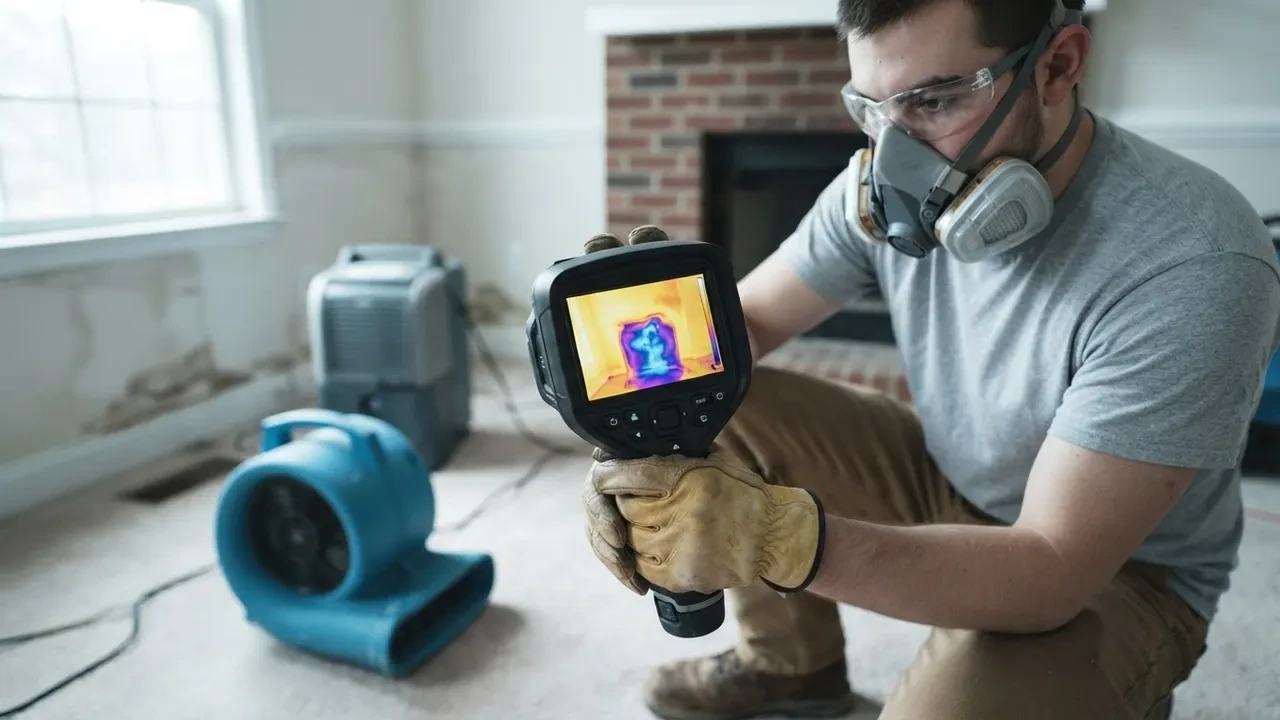
Water damage restoration in Smyrna : Close-up of a thermal imaging camera display showing a clear, colorful temperature
Careful work. Honest options.
About this service

Mold Remediation Smyrna GA: What It Involves

mold remediation Smyrna GA is a property restoration service that identifies moisture-driven mold growth, contains the affected area, removes unsalvageable materials, and dries the structure. We start by checking visible damage and concealed spaces, then use moisture meters and thermal imaging cameras to map dampness beyond the stain. Containment limits dust movement while our crew removes compromised drywall or insulation, cleans suitable surfaces with antimicrobial solutions, and runs dehumidifiers. The goal is a dry, clean work area and a corrected moisture source, not a cosmetic coat of paint over active growth.

Smyrna properties face mold risks after pipe bursts, roof leaks, basement flooding, or persistent crawl space moisture. Georgia's humid periods can slow drying when wet carpet padding or wall cavities stay closed, especially after a storm or plumbing leak. Our Smyrna mold remediation work pairs removal with source control, and we check surrounding materials before closing a wall. If you are searching for mold remediation Smyrna GA near me, describe the leak, how long materials stayed wet, and which rooms smell musty; those details help us plan the inspection.

  • ✓ Moisture source identified
  • ✓ Affected areas contained
  • ✓ Materials dried correctly
  • ✓ Repairs follow cleanup
What's included

What Mold Remediation Includes

Our mold remediation work covers assessment of visible growth and moisture, protection of the work area, removal of affected porous materials when needed, cleaning of suitable surfaces, and monitored drying. We also identify the water source so the same area is not left damp. Structural repairs, major plumbing or roof repairs, extensive contents restoration, and independent laboratory testing are separate needs when the inspection calls for them; we explain how each fits into the job.

01
✓

Moisture and Area Assessment

We inspect visible growth, nearby materials, and likely water paths, then use moisture readings to establish affected boundaries. This helps determine whether the issue is limited to a surface or extends into drywall, insulation, flooring, or framing.

02
✓

Work-Zone Protection

We set up practical containment around the work area and protect nearby contents and surfaces. You receive clear guidance on room access while removal is underway, helping reduce dust movement into occupied portions of your home or business.

03
✓

Affected Material Removal

When porous materials cannot be cleaned effectively, we remove the damaged sections and inspect the newly exposed cavity. We focus on affected areas rather than removing sound finishes without a reason, and handle debris carefully.

04
✓

Cleaning and Drying

Suitable surfaces are cleaned, and drying equipment is placed to move moisture from the affected assembly. We monitor readings as materials dry and adjust equipment, rather than ending the process based only on elapsed time.

05
✓

Completion Walk-Through

We review the treated area with you, explain what was removed or cleaned, and identify any repairs that follow. You can see the drying status and understand what needs to happen before new finishes are installed.

How it works

What to Expect During Cleanup

We walk the affected rooms with you, document visible damage, and check likely moisture paths around plumbing, windows, ceilings, or floors. Moisture meters and thermal imaging cameras help locate damp areas behind finishes. The initial assessment often takes 30 to 90 minutes, depending on access and the number of rooms. We identify the suspected source and explain the next steps.

Before removal, we define the work area, protect nearby belongings, and set containment appropriate to the materials and scope. You will know which doors or hallways to avoid and whether equipment needs a dedicated power outlet. Preparation commonly takes one to three hours; complex layouts or several connected rooms require more setup.

We remove materials that cannot be cleaned effectively, such as heavily affected drywall or wet insulation, while preserving sound building components where practical. Cleanable surfaces receive appropriate cleaning and antimicrobial treatment. Our crew handles debris carefully and checks adjoining cavities so a small opening does not leave a larger hidden moisture pocket behind.

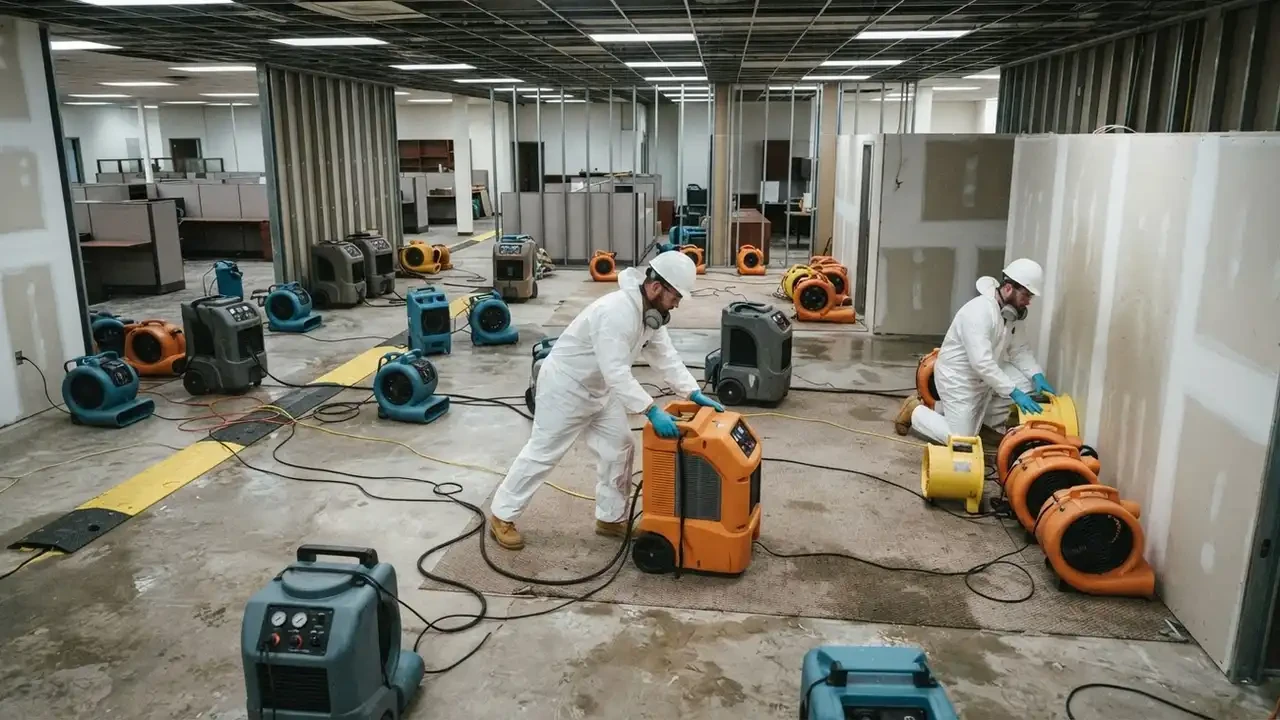
Industrial air movers and dehumidifiers move moisture out of building materials and the room air. We record readings at regular checks, often every 24 hours, and reposition equipment when airflow needs adjustment. Drying commonly takes two to five days, with longer runs for dense framing, hardwood flooring, or water trapped beneath finished surfaces.

We confirm that the treated area has reached dry conditions before repair materials go back in. You receive a walk-through of completed cleanup and any remaining repairs, such as replacing drywall or trim. Where reconstruction is needed, we coordinate the work after drying rather than sealing damp surfaces behind new finishes.

Water damage restoration in Smyrna : aerial view inside a large commercial office space, showing multiple industrial
STEP 01Inspect and map

We walk the affected rooms with you, document visible damage, and check likely moisture paths around plumbing, windows, ceilings, or floors. Moisture meters and thermal imaging cameras help locate damp areas behind finishes. The initial assessment often takes 30 to 90 minutes, depending on access and the number of rooms. We identify the suspected source and explain the next steps.

Tools & methods

Tools and Remediation Methods

01
✓

Moisture Meters

We measure moisture in drywall, framing, and flooring to locate damp materials and track drying. Readings help set boundaries and confirm when the affected assembly is ready for repair.

02
✓

Thermal Imaging Cameras

We use thermal imaging to spot temperature patterns that can guide further moisture checks. The camera helps target inspection; moisture readings confirm whether a material is actually wet.

03
✓

Industrial Air Movers

Air movers direct airflow across wet surfaces and into accessible cavities. We adjust placement as drying progresses so damp areas receive airflow without relying on a fixed equipment setup.

04
✓

Dehumidifiers

Dehumidifiers remove moisture released into the room air during structural drying. We monitor conditions and equipment performance to support drying of framing, drywall edges, and flooring.

05
✓

Hygrometers

Hygrometers measure relative humidity and temperature in the work area. These readings help us understand room conditions and adjust dehumidification as materials release moisture.

06
✓

Borescopes

A borescope can help inspect a concealed cavity through a small access point when conditions allow. We use it to inform targeted decisions rather than opening a larger area without need.

Real results

Before and After.

Water damage restoration in Smyrna : Close-up of a thermal imaging camera display showing a clear, colorful temperature
Mold Remediation

Laundry Wall After Pipe Leak

A slow supply-line leak left a musty odor near a laundry room and damp drywall behind the washer. The visible stain measured about 3 feet wide, but moisture readings showed a larger area around the pipe chase. The room remained in use, so access and equipment placement needed to protect the walkway.

After: The leak source was stopped, affected drywall was removed, and the cavity was dried with air movers and a dehumidifier. Follow-up readings over three days showed the framing had dried enough for repair. The damaged section was replaced after cleanup, and the musty odor was no longer present at the final walk-through.

Book this service →
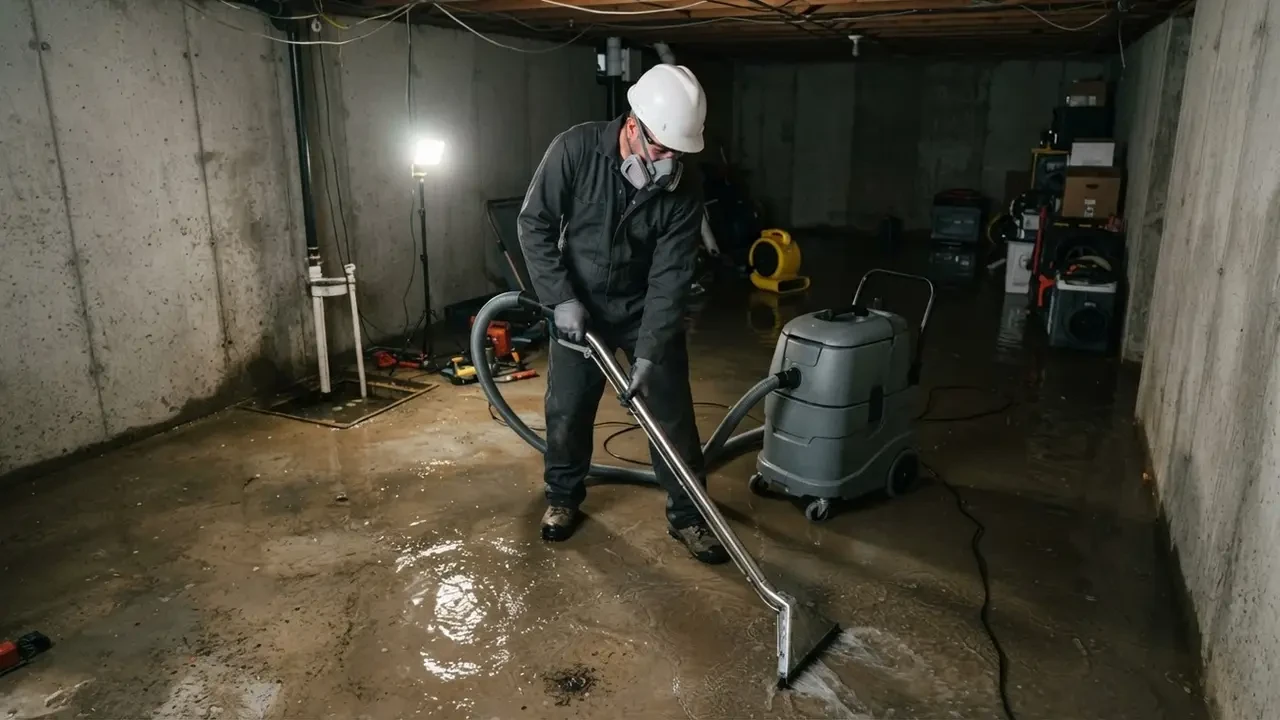
Water damage restoration in Smyrna : restoration technician using a professional-grade water extractor to remove standing
Mold Remediation

Basement Wall Following Rain

Rainwater entered along a basement wall and left stored boxes, carpet padding, and the lower drywall wet. A musty smell lingered after standing water was removed, and the owner could not tell whether the wall cavity had dried. The affected area covered roughly 80 square feet.

After: We moved contents from the work zone, removed compromised porous materials, and checked the wall edge and floor for remaining moisture. Dehumidification and airflow continued for four days with readings recorded during checks. The cleanup left the area ready for repair after the moisture source was addressed.

Book this service →
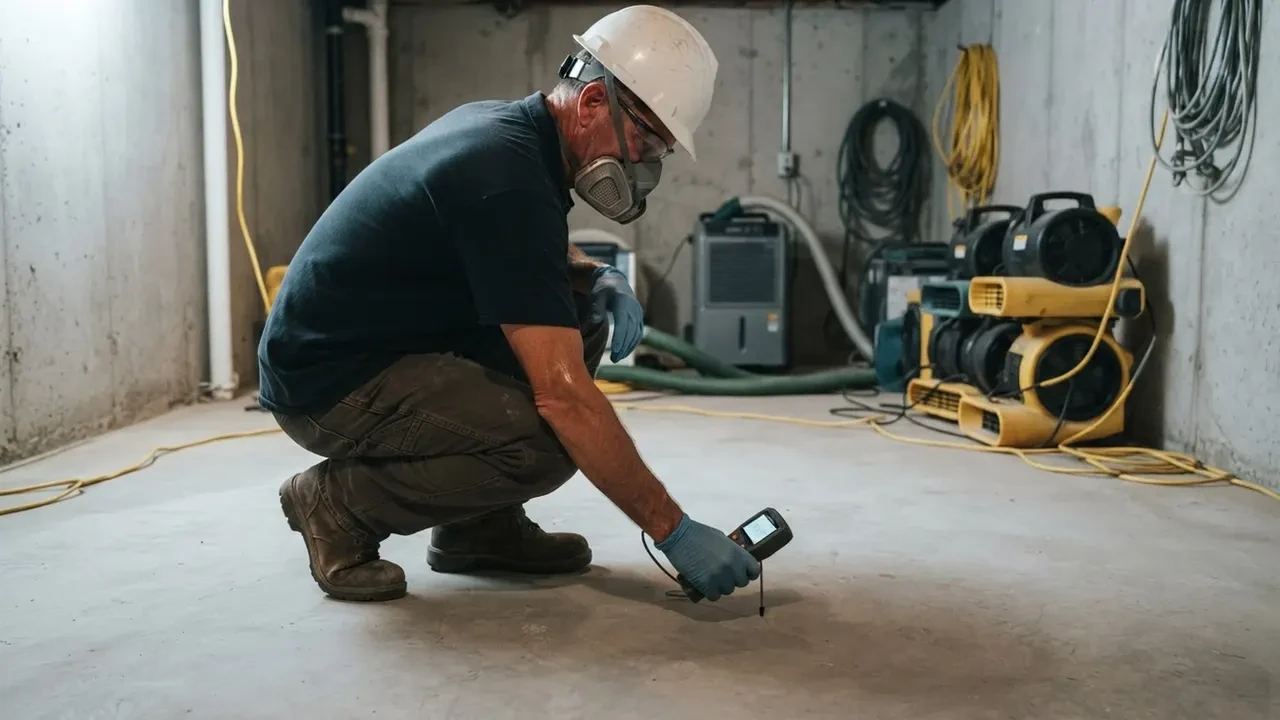
Water damage restoration in Smyrna : detail shot of a clean, dry concrete basement floor after water damage restoration
Mold Remediation

Ceiling Leak Near Spring Road

A roof leak stained an upstairs ceiling and left a damp odor in the room below. The visible mark was about 2 feet across, but water had traveled along framing into insulation. The ceiling remained closed, leaving the extent of the damage uncertain.

After: The affected ceiling section was opened, wet insulation removed, and framing dried with monitored equipment over three days. We confirmed the source repair was complete before the cavity was closed. New drywall and finish work restored the ceiling, with no remaining damp odor reported at handoff.

Book this service →
Problems we solve

Problems Solved by Smyrna Mold Remediation

Persistent moisture can turn a small leak into damaged finishes, lingering odor, and hidden growth. Our team looks for the condition driving the problem, then matches removal and drying to the affected materials. If you are searching for mold removal near me Smyrna, a clear description of the leak and damp area helps us focus the first visit.

Ask a pro →
01

Musty Odor Remains After a Plumbing Leak Was Repaired

We inspect along the leak path, take moisture readings, and check nearby cavities where water can collect. If porous material is affected, we remove the necessary section, clean sound surfaces, and dry the assembly. We also verify that the plumbing source has stopped before the room is closed.

↗
02

Dark Spotting Spreads Along a Basement Wall

We identify whether water entered through a leak, seepage, or another source, then assess the wall and floor edges. Our crew contains the work zone, removes unsalvageable material, and uses drying equipment with follow-up readings. We explain which basement items can remain and which need to move.

↗
03

Ceiling Stain Grows After Heavy Rain

We trace the water path from the ceiling toward the entry point and coordinate with roof repair as needed. We remove affected ceiling material, inspect the cavity, and dry the framing before repairs. This approach addresses storm-related moisture instead of simply painting over the stain.

↗
04

Crawl Space Dampness Raises Indoor Musty Smells

We inspect accessible crawl space areas for standing water, wet materials, and likely moisture entry. After water removal or source correction, we dry the affected space and address confirmed growth. We check the floor assembly above so remediation is based on actual moisture findings.

↗
Proof you can check

Training and Work Standards

  • Water Restoration Technician training · Institute of Inspection, Cleaning and Restoration Certification
  • Applied Microbial Remediation Technician training · Institute of Inspection, Cleaning and Restoration Certification
  • Applied Structural Drying training · Institute of Inspection, Cleaning and Restoration Certification
  • EPA Lead-Safe practices · U.S. Environmental Protection Agency
Good questions

Mold Remediation Questions, Answered

(833) 546-4116 →

Small, contained mold remediation in Smyrna often varies while larger projects can vary. The price depends on affected square footage, access, material removal, containment, and drying time. A simple surface cleanup costs less than opening walls or removing wet insulation. We inspect the affected area and explain the work and upfront pricing before cleanup begins.

Insurance may cover mold removal in Smyrna when it results from a covered, sudden water event, but gradual leaks and maintenance issues are often treated differently. Your policy controls the decision. We document visible damage, moisture readings, and related water intrusion so you have useful records for your claim. Contact your insurer promptly, keep photos, and avoid discarding damaged materials before documenting them when it is safe to do so.

A small, contained project can take one to three days, while multi-room remediation and drying often takes three to seven days before repairs. Removal may finish in hours, but structural drying depends on material thickness, airflow, and how long the area stayed wet. We check moisture readings, often every 24 hours, and extend drying when materials remain damp. Reconstruction adds time after the area is verified dry.

Smyrna Water Damage Company handles emergency mold removal near me in Smyrna, with calls answered at (833) 546-4116. For active water, stop the source if safe, keep people away from visibly affected materials, and avoid disturbing moldy surfaces. We can assess the moisture path, discuss 24/7 mold removal in Smyrna GA response needs, and plan containment, removal, and drying based on the conditions in your property.

Ready when you are

Get Mold Remediation Smyrna GA Started

If you see growth, smell persistent mustiness, or have wet materials after a leak, call our team at (833) 546-4116. Our technicians follow IICRC-informed remediation practices and will help you identify the next practical step for your property.

Request Help (833) 546-4116 →
Request an appointment

Contact Our Team

Call (833) 546-4116 for help with a leak, flooded room, sewage backup, or mold concern in Smyrna. Calls are accepted around the clock for urgent restoration requests, and we connect you with independent companies serving the area. Share your neighborhood or ZIP code, the water source, and whether the damage is still active so we can direct your request.

Request received — our team will be in touch shortly.
↗
Emergency?Call now